



DIRECT CUE-BIDS

THIS ARTICLE IS OFFERED TO YOU
We are pleased to offer you this exclusive BRIDGERAMA+ post.
After an opponent opens the bidding it’s a good idea to be able to show a two-suited hand.
One of the first conventions players learn is the “Unusual Notrump.” A jump to 2NT over the opponent’s opening bid shows the 2 lowest unbid suits. A logical extension of this convention is to use Michaels’ Cuebids. This popular convention works as follows:
| Opponent’s opening bid | Our bid | Meaning |
| 1♣ | 2♣ | 5+ Hearts and 5+ Spades |
| 1♦ | 2♦ | 5+ Hearts and 5+ Spades |
| 1♥ | 2♥ | 5+ Spades and 5+ minor |
| 1♠ | 2♠ | 5+ Hearts and 5+ minor |
Or, if you prefer it in words:
A cue-bid of the opponent’s minor shows BOTH MAJORS.
A cue-bid of the opponent’s major shows the other major and either minor.
Most Americans use Michaels’ cuebids (in other parts of the world there are variations, but usually the cue-bid shows a 2-suiter of some sort).
The big questions for Michaels cuebids are:
- What strength?
- What suit quality?
- What are the follow-ups?
What Strength?
Usually, a Michaels’ bid is made with a preemptive (weakish) hand, such as:
♠ KJ985
♥ KJ1042
♦ 43
♣ 2
Over the opponent’s 1-of-a-minor opening, I would bid 2-of their-minor with this hand (planning to accept whatever decision partner makes).
However, I could also make a Michaels’ bid with a super hand such as:
♠ AKQ105
♥ AKJ104
♦ K2
♣2
This time my plan is to put partner in game when he chooses a major.
There is a school of thought that a Michaels’ bid should be avoided with a medium hand such as:
♠ AQ764
♥ AQ1076
♦ 54
♣ 2
The thinking is that when partner chooses a major, you won’t know whether or not a game is in the picture. For that reason, many players choose to define Michaels as “weak/preemptive or very strong – not in-between.” There are pros and cons to this philosophy; suffice to say that you should discuss with your partner whether or not he adheres to this practice.
What Suit Quality?
This depends a bit on your general preemptive philosophy. If you are an aggressive preemptor, your suit quality will obviously have the possibility to be worse than a sound preemptor’s. I suggest that the vulnerability is the most important factor. Vulnerable against not, it wouldn’t occur to me to commit a Michaels bid over 1♣ with, say:
♠ Q9875
♥ KJ842
♦ 43
♣ 6
At favorable vulnerability, I wouldn’t mind a Michaels’ bid with those poorish suits. When Vulnerable, I like to have much better suits ‒ better meat at the top. In all cases, 5-5 is the minimum distribution (although a former partner of mine would sometimes have 5-4… and I think I even recall 4-4).
Follow-ups
After 1♣-2♣ or 1♦-2♦, the partner simply picks his best (longest) major and bids to the appropriate level. With equal length in the majors, choose the better one. If the partner of the Michaels’ bidder thinks there is a game, he can just jump there (sophisticated methods involve using 2NT as an ask). If the partner of the Michaels’ bidder is not interested in game, he should use the LAW of Total Tricks. Bid to the 3-level with 4-cards in a major (not an invitation), the 4-level with 5 cards.
After 1♥-2♥ or 1♠-2♠, the partner uses the same guidelines as above if he is “supporting” the major. If he has no interest in partner’s major, he can bid No-Trump (on the appropriate level, again using the guidelines above) to ask partner to name his minor. Use care as responder; if you have only two in partner’s major, and only two in one of the minors, don’t get carried away (your partner’s minor will usually match your 2-card minor – that is the story of life, as well as the bridge probabilities).
Other/Advanced
Just as with any convention, you need to make sure if it is on:
- By a Passed Hand (I recommend YES).
- In balancing seat (I recommend YES).
- After opponents bid 1any-Pass-1NT (I recommend YES).
- After the opponents bid and raise; for example: 1♥-Pass-2♥ (I recommend you discuss this).
- After Weak 2-bids; for example: 2♥-3♥ (I recommend you discuss this).
Also, what if the opponents double your Michaels’ bid? What does partner’s pass mean? His redouble? His preference?
For example: 1♦-2♦-Double-Pass. Does the Pass mean he wants to play in Diamonds? Does he want you to pick the major? All of this requires discussion.
Responses to a 2♣ cue-bid (Hearts and Spades)
| Response | Meaning |
| 2♦ | Natural, showing a very good Diamond suit (usually 6+) since the Michaels’ cue-bidder usually has only 0-2 Diamonds. Tends to deny 3+ card support for either suit. Non-forcing. |
| 2♥ | A non-forcing sign-off. May have 0 points, since the Michaels’ overcall is a forcing bid. Note that with equal support for both majors (e.g. ♠xxx ♥xxx), the cheaper suit (Hearts) should be bid. |
| 2♠ | A non-forcing sign-off. |
| 2NT | Natural and invites partner to bid 3NT IF the partnership has agreed to a specific point range for the Michaels’ overcall. |
| 3♣ | Artificial and shows game or slam interest in Hearts or Spades. Forcing. |
| 3♦ | A very strong Diamond suit (6+ cards). Forcing (and rare). |
| 3♥ | Preemptive, usually with four Hearts in accordance with the Law of Total Tricks. Non-forcing. |
| 3♠ | Preemptive, usually with four Spades in accordance with the Law of Total Tricks. Non-forcing. |
| 3NT | A natural sign-off. Shows a big balanced hand with no interest in major-suit game. This bid may occur IF the partnership has agreed to a specific point range for the Michaels’ overcall. Otherwise, it’s quite rare since it’s so unilateral. |
Responses to a 2♦ Cue-bid (Hearts and Spades)
| Response | Meaning |
| 2♥ | A non-forcing sign-off. |
| 2♠ | A non-forcing sign-off. |
| 2NT | Natural and invites partner to bid 3NT IF the partnership has agreed to a specific point range for the Michaels’ overcall. |
| 3♣ | Natural, showing a very good Club suit (usually 6+) since the Michaels’ cue-bidder usually has only 0-2 Clubs. Non-forcing. |
| 3♦ | Artificial and shows game or slam interest in Hearts or Spades. Forcing. |
| 3♥ | Preemptive, usually with four Hearts in accordance with the Law of Total Tricks. Non-forcing. |
| 3♠ | Preemptive, usually with four Spades in accordance with the Law of Total Tricks. Non-forcing. |
| 3NT | A natural sign-off. |
Responses to a 2♥ cue-bid (Spades and a minor)
| Response | Meaning |
| 2♠ | A non-forcing sign-off. |
| 2NT | Asks the overcaller to bid his minor suit at the 3-level. 2NT may be bid on a variety of hands, but is most commonly used to try signing off in 3♣/♦. Holding ♠xx ♥xx ♦Qxxx ♣Jxxxx, bid 2NT to identify the minor suit fit. |
| 3♣ | Natural, showing a very good Club suit (usually 6+) since the Michaels’ cue-bidder will usually hold 5+ Diamonds, not Clubs. Non-forcing. |
| 3♦ | Natural, showing a very good Diamond suit (usually 6+) since the Michaels cue-bidder will usually hold 5+ clubs, not Diamonds. Non-forcing. |
| 3♥ | Artificial, and shows game or slam interest in Spades or a minor. Forcing. |
| 3♠ | Preemptive, usually with 4 Spades in accordance with the Law of Total Tricks. Non-forcing. |
| 3NT | A natural sign-off. |
Responses to a 2♠ cue-bid (Hearts and a minor)
| Response | Meaning |
| 2NT | Asks the overcaller to bid his minor suit at the 3-level. |
| 3♣ | Natural, showing a very good Club suit (usually 6+) since the Michaels’ cue-bidder will usually hold 5+ Diamonds, not Clubs. Non-forcing. |
| 3♦ | Natural, showing a very good Diamond suit (usually 6+) since the Michaels cue-bidder will usually hold 5+ clubs, not Diamonds. Non-forcing. |
| 3♥ | A natural sign-off. |
| 3♠ | Artificial, and shows game or slam interest in Hearts or a minor. Forcing. |
| 3NT | A natural sign-off. |
THE PROBLEMS
[SELECTED BY THE BRIDGERAMA TEAM]
BIDDING
Direct Cue-bids
1.
♠ AQJ94
♥ –
♦ 862
♣ KQJ93
| W | N | E | S |
|---|---|---|---|
| 1♥ | |||
| ? |
A) 1♠
B) 2♥
C) Dble
2♥ = 5
1♠ = 4
Dble = 3
If you start with a Double, a response in Diamonds will be awkward, as rebidding Spades suggests more in the way of high cards. Overcalling 1♠ is not bad, but indicating a two-suited hand is best.
2.
♠ – J954
♥
♦ 1098643
♣ Q82
| W | N | E | S |
|---|---|---|---|
| Pass | |||
| Pass | 1♥ | 2♥ | Dble |
| ? |
A) Pass
B) 3♣
C) 3♦
Pass = 5
3♣ = 3
3♦ = 1
Bidding Diamonds would suggest a much better suit. 3♣ is possible if you have agreed that it is ‘Pass or correct’. Passing shows no fit for Spades and a modest hand, leaving partner to make the next move if East passes.
3.
♠ 3
♥ A10543
♦ AKQ953
♣ 5
| W | N | E | S |
|---|---|---|---|
| 1♠ | |||
| ? |
A) 3♦
B) 2♦
C) 2♠
2♠ = 5
2♦ = 3
3♦ = 2
Jumping to 3♦ suggests a weak hand with Diamonds – and may lose a Heart fit. Overcalling 2♦ may keep Hearts in the picture, but simplest is to show a two-suiter immediately.
4.
♠ 3
♥ AJ10
♦ AKQ1098
♣ Q2
| W | N | E | S |
|---|---|---|---|
| 1♣ | 2♣ | Pass | |
| ? |
A) 4♥
B) 3♣
C) 3♦
3♦ = 5
4♥ = 4
3♣ = 3
3♣ is forcing, but keeps your main asset hidden. Jumping to game is reasonable but eliminates the possibility of a slam. 3♦ indicates a very strong suit and is forcing.
5.
♠ 82
♥ K3
♦ AQJ54
♣ K974
| W | N | E | S |
|---|---|---|---|
| 1♠ | 2♠ | 3♠ | |
| ? |
A) 4NT
B) 3NT
C) Pass
4NT = 5
3NT = 3
Pass = 1
With an excellent fit for whichever minor suit partner holds and the ♥K, passing would be too reserved. 3NT might be interpreted as a desire to play there. 4NT, asking partner to bid five of a minor, is clearly best.
6.
♠ 6
♥ AQ1097
♦ A6
♣ K8542
| W | N | E | S |
|---|---|---|---|
| 1♦ | |||
| ? |
A) 2♦
B) 2NT
C) 1♥
1♥ = 5
2NT = 4
2♦ = 0
Overcalling 2♦ would show both majors! If you want to indicate a two-suiter, 2NT ‒ showing the lowest unbid suits ‒ is the way to go, but with an intermediate hand and poor secondary cards in Clubs a simple overcall is superior.
7.
♠ 9532
♥ Q65
♦ 2
♣ QJ652
| W | N | E | S |
|---|---|---|---|
| 1♦ | 2♦ | Dble | |
| 3♠ | 3NT | Pass | Pass |
| ? |
A) 4♠
B) Pass
C) Dble
4♠ = 5
Pass = 3
Dble = 0
There are no grounds for doubling. Passing is down the middle, but with a nine-card fit in Spades and a useful honour in Hearts you may have a good save.
8.
♠ 73
♥ J863
♦ Q94
♣ AK108
| W | N | E | S |
|---|---|---|---|
| 1♦ | 2♦ | Pass | |
| ? |
A) 4♥
B) 3♥
C) 3♦
4♥ = 5
3♦ = 3
3♥ = 2
3♥ is preemptive, suggesting a weaker hand. 3♦ is a possibility, but with four-card support for Hearts and ruffing values in Spades you have enough to bid game.
DECLARER PLAY
Problem 1
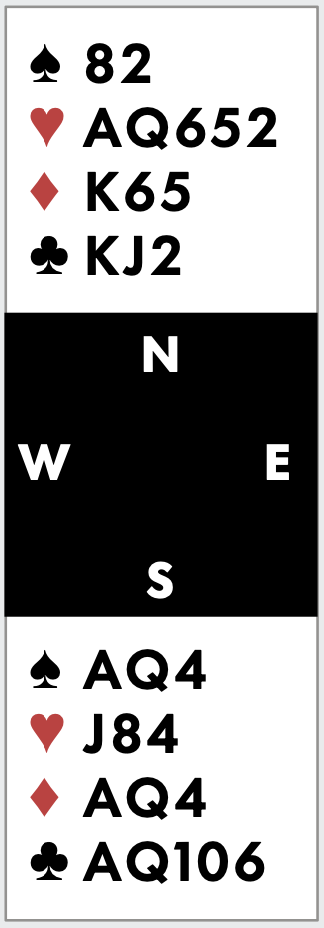
Contract: 6 No-Trump.
Lead: ♠7 (East overcalled 2♠).
What’s your plan?
a) Win in hand, cross to dummy and play a Heart to the Jack.
b) Win in hand and play a Heart to the Ace.
c) Win in hand and play the ♥J.
Win in hand and play the ♥J, c).
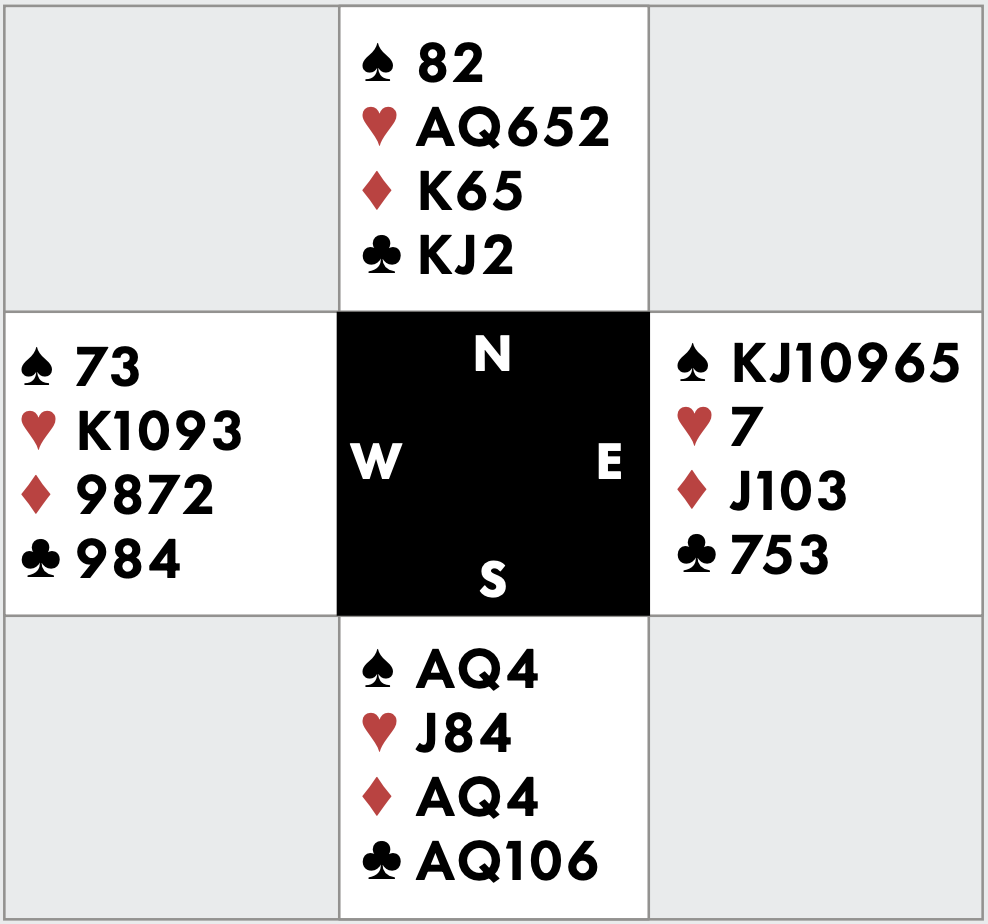
Your best chance of avoiding two Heart losers if the suit breaks 4-1 is to find East with a singleton 10, 9 or 7. When the Jack is covered by the King and Ace, you continue with a Heart to the 8 and 9. You can then finesse on the next round of the suit. If East happens to have four Hearts then a major suit squeeze will develop.
Problem 2
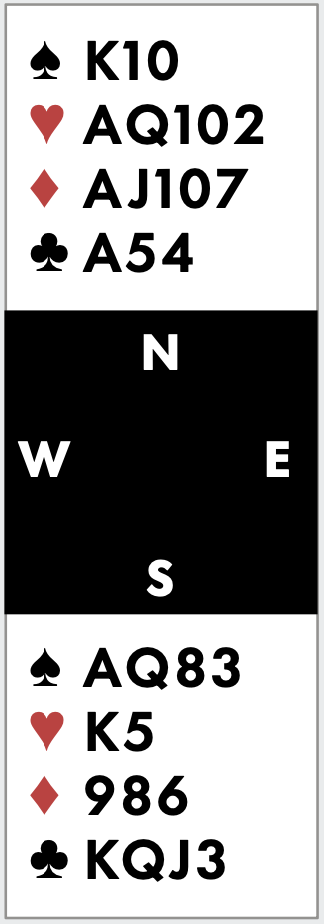
Contract: 6 No-Trump.
Lead: West leads the ♣10.
Do you:
a) Win in hand and run the ♦9.
b) Win in hand and play a Spade to the 10.
c) Win in dummy, cash two more Clubs and then run the ♦9.
Win in dummy, cash two more clubs and then run the ♦9, c).
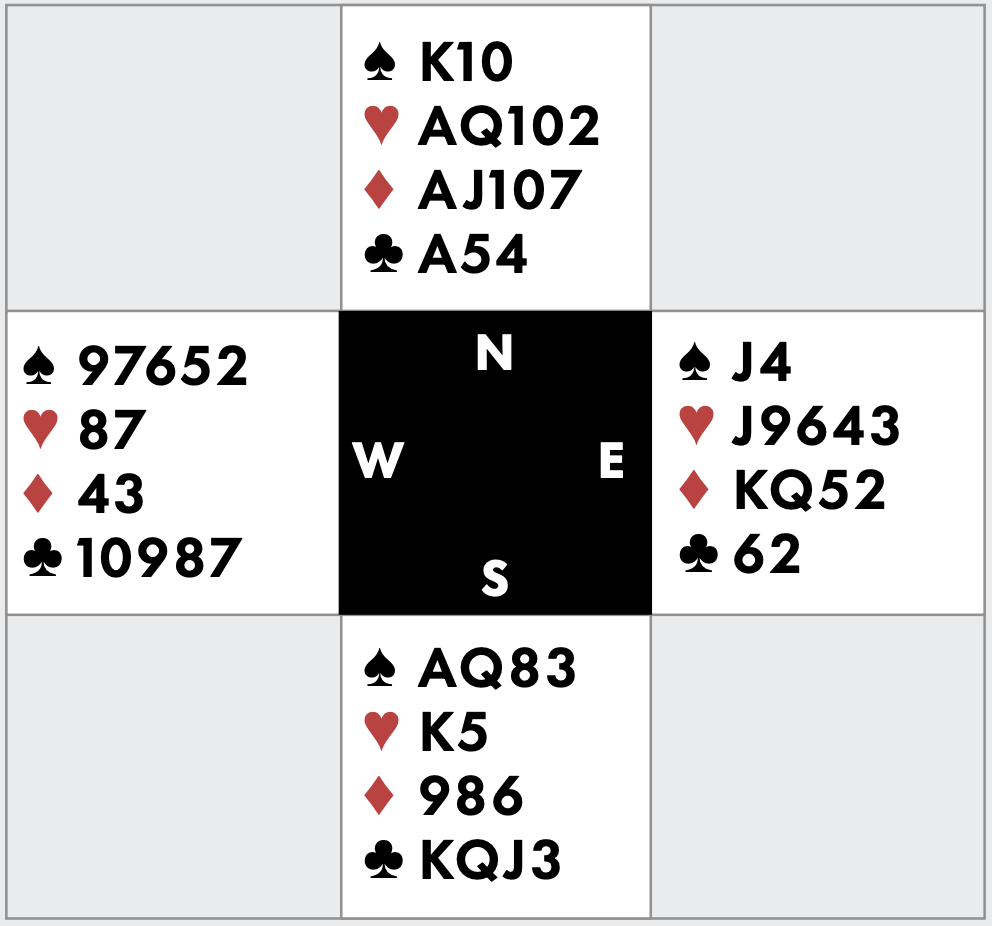
Once you have exhausted East of Clubs, running a Diamond ensures the contract, as whichever suit is returned allows you to score a twelfth trick.
Problem 3
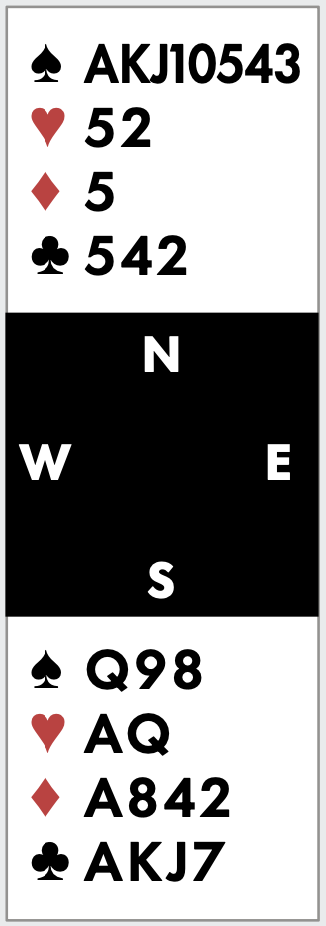
Contract: 6 Spades.
West leads the ♦K.
What is your plan?
a) Win, draw trumps, cash the ♣AK and play a Club.
b) Win, draw trumps and play a Club to the Jack.
c) Win, ruff a Diamond, come to hand with a trump, ruff a Diamond, come to hand with a trump and ruff your last Diamond before playing a Club.
Win, ruff a Diamond, come to hand with a trump, ruff a Diamond, come to hand with a trump and ruff your last Diamond before playing a Club, c).
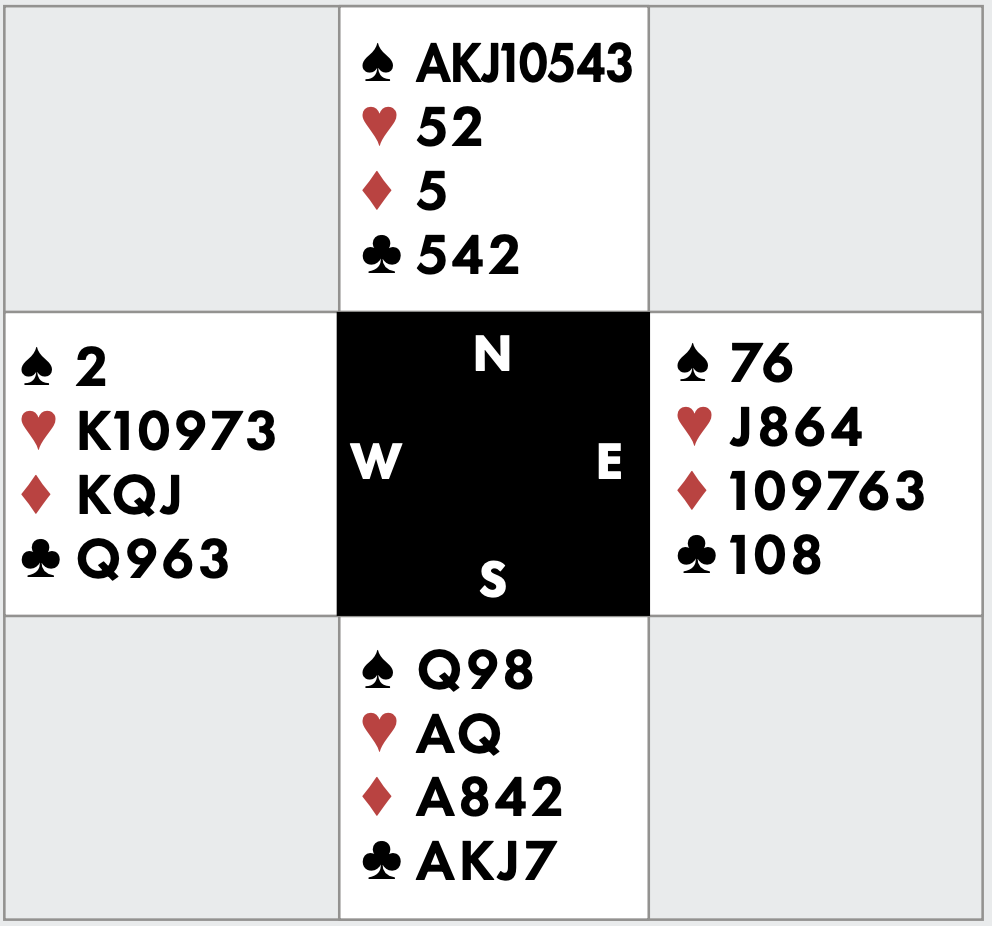
If you can exhaust West of Diamonds and then duck a Club into West’s hand, you will be safe. When East plays the ♣8 on the first round, you take the ♣A, cross to dummy and play a second Club, covering the ♣10 with the ♣J, endplaying West.
